
The story, without spoilers
A long time ago, in a galaxy far, far away, a small rebellion is losing its fight against a galactic Empire that has just finished building a battle station big enough to destroy a planet. Princess Leia Organa, carrying stolen plans that could reveal its weakness, hides a message inside a little astromech droid, R2-D2, moments before her ship is captured by the Empire's enforcer, Darth Vader.
R2-D2 and his fussy companion C-3PO land on the desert planet Tatooine and end up with Luke Skywalker, a farm boy who dreams of leaving. The message leads him to an old hermit named Ben Kenobi, then to a cantina full of smugglers, and to a pilot called Han Solo and his co-pilot Chewbacca, who will take almost any job for the right price.
Behind the scenes
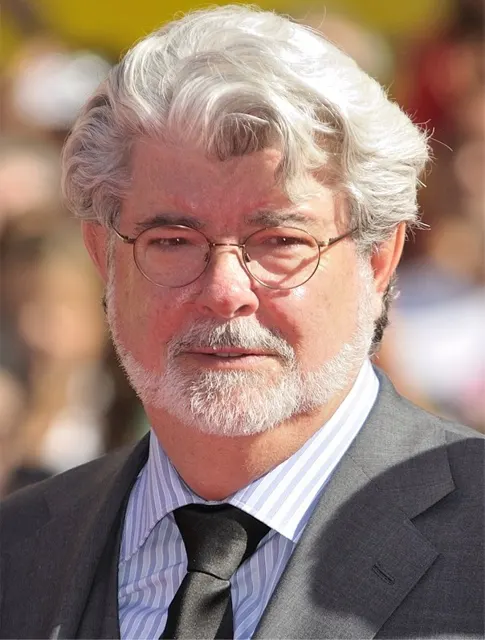
George Lucas wrote and directed the film after many rewrites, and principal photography began in March 1976, on location in Tunisia and at Elstree Studios in Hertfordshire, England, where production designer John Barry built some thirty sets. The budget was $11 million.
No existing effects house could deliver the space battles Lucas imagined, so he founded Industrial Light & Magic to do it. Sound designer Ben Burtt built a library of sounds Lucas called an “organic soundtrack”; R2-D2's beeps came from Burtt imitating baby noises, recording through an intercom and mixing the result on a synthesiser. John Williams answered the space imagery with a full symphonic score, unfashionable at the time.
Lucas first imagined a science-fiction adventure in the vein of Flash Gordon around the time he finished THX 1138, and began a treatment after American Graffiti. After numerous rewrites, principal photography started in March 1976 in Tunisia and at Elstree Studios in Hertfordshire. To create the effects he needed, Lucas founded Industrial Light & Magic. The shoot was difficult: the cast and crew expected a flop, and delays pushed the film $3 million over budget.
Why it still matters
Star Wars opened on 25 May 1977 and changed what a studio thought a summer film could be. It earned $775.4 million worldwide with re-releases, on an $11 million budget, and built a merchandising and sequel business that is still going nearly fifty years later. Its subtitle, Episode IV – A New Hope, arrived with the 1981 reissue, and a Special Edition followed in 1997.
Its influence on craft is just as lasting. ILM, founded to make this film, went on to create effects for Jurassic Park and many of the films on this page. The Library of Congress chose it for the National Film Registry in 1989, among the first 25 titles ever selected, and its score was later preserved too.
Few people expected much when it opened in a small number of American cinemas on 25 May 1977. It became a surprise hit, was rolled out far wider, and its initial run of $410 million overtook Jaws as the highest gross of all time until E.T. in 1982. Adjusted for inflation, it is second only to Gone with the Wind in the United States and Canada.
In 1989 it was among the first 25 films chosen for the National Film Registry, and its soundtrack joined the National Recording Registry in 2004. The Empire Strikes Back and Return of the Jedi followed, and prequel and sequel trilogies, spin-offs and series have kept the galaxy expanding ever since.